
Patient Newsletter | July 2026
4 Tips for Helping Your Kidney Stones Pass
 Nearly one in every 10 people in the U.S. develops kidney stones. Kidney stones are hardened deposits made from a high saturation of minerals and salts in your urine. Once a stone migrates from the kidney to the ureter (where urine travels) it can become severely painful, based on its size. The ureter is just an eighth of an inch or so wide, so a stone can be pretty small and still hurt.
Symptoms of kidney stones include:
- Sharp pain from the back, sides, groin, and/or testicles (for men)
- Nausea and vomiting (from the pain)
- Blood in the urine
If you think you have a kidney stone, call your urologist. Stones of about an eighth of an inch or less can pass in your urine, but here are some tips to help them pass:
- Drink a lot of water to flush them out.
- Take pain meds as needed.
- Remain moderately active.
- Watch out for too much salt, fat, or calcium in your diet.
Stones that cannot pass on their own or that cause complications will need to be addressed by a doctor.
Watch Dr. Jason Sandberg’s latest webinar, Summer’s Secret Pain: Why Kidney Stones Spike with the Heat & How to Prevent Them. In it, he gives a detailed overview of the procedures available to treat kidney stones, including the newer CVAC/SURE procedure, which uses a laser to break up stones and vacuum out the fragments.
Restoring Dignity: Dr. Melissa Fischer’s Life-Changing Mission to Angola
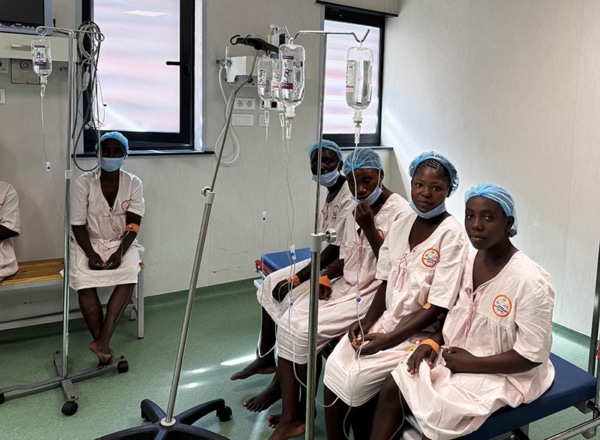 Imagine giving birth without medical help, enduring days of prolonged labor, and surviving, only to be left with a debilitating condition that causes constant incontinence. For many women in Angola, this is a harsh reality. Because of the stigma surrounding the condition, these women are often shunned by their families and communities, left to suffer in silence.
This past spring, Dr. Melissa Fischer flew 7,000 miles to Angola, located on the west coast of Africa, to change that. Her mission was simple yet profound: give these women their lives back. Joined by other physicians and medical assistants, the team worked 12-hour days repairing obstetric fistulas, an injury that leads to urinary and fecal incontinence, and restoring dignity to women who have severely limited access to maternal healthcare.
Learn more about Dr. Fischer’s journey and this once-a-year humanitarian effort.
BPH, ED, and Ejaculation Issues: What’s the Connection?

If you struggle with erectile dysfunction, you’re up to 6 times more likely to have an enlarged prostate (BPH) according to 2025 research. Another study showed that men with enlarged prostates are more likely to experience ejaculation dysfunction.
If you’re experiencing ED or ejaculation issues, it makes sense to find out if you have BPH, and if so, take steps to have your BPH treated. Typical BPH symptoms include:
- Straining, or difficulty starting to urinate
- Sudden, strong urges to urinate
- An inability to completely empty the bladder
- Peeing more frequently, especially at night
- Having a weaker urine stream
- Leakage
Sound familiar? If so, learn about BPH treatment options with the least chances of sexual side effects.
Tired of the Ups and Downs? Step Off the Roller Coaster.

The cycle of weight gain, hormonal swings, and sexual frustration can feel like a roller coaster ride. The Elevated Wellness & Weight Loss Program at our REDEEM Sexual Wellness & Aesthetics Center can get you off the roller coaster once and for all.
The program’s whole-body approach to looking and feeling your best includes:
- One-on-one consultation to establish your wellness goals
- Comprehensive blood work to identify hormonal imbalances
- Body composition scan to show what’s impacting your health
- Guidance on your personal nutrition and fitness plan
- Weight management injections for safe and effective weight loss
Support continues during your maintenance phase to keep you focused on your long-term health goals.
Learn more about the Elevated Wellness & Weight Loss Program, then schedule a consultation to get started on your path to success.
Share This Post